

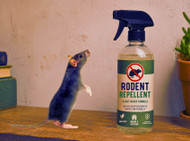
Do Rodent Repellents Work? Why Most DIY Mouse & Rat Remedies Fail
May 19th 2026
Homeowners dealing with mice or rats often start in the same place: repellents.
Peppermint sprays. Ultrasonic plug in devices. Rodent repellent pouches. Dryer sheets. Cayenne pepper. Mothballs.
The appeal is obvious. These products promise an easy fix. No crawling through the attic. No sealing gaps around pipes. No figuring out where rodents are getting inside.
Unfortunately, that’s also why so many people end up dealing with recurring infestations year after year.
The truth is that rodent repellents do not stop rodent infestations. They do not keep rodents out permanently. And they do not address the real reason mice and rats continue entering homes in the first place.
Rodents enter structures because they have access to food, warmth, water, and shelter. If those opportunities exist, smells and sound devices are not going to stop them.
That’s why long term rodent prevention depends on exclusion. Physically blocking rodents from getting inside in the first place.
Does Rodent Repellent Work?
Unfortunately, no. In real world conditions, rodent repellents fail to stop infestations or prevent rodents from returning.
This includes sprays, pouches, essential oils, ultrasonic devices, dryer sheets, and other DIY home remedies marketed online.
The biggest reason is simple: rodents tolerate and adapt to unpleasant environments extremely well.
Mice and rats regularly and happily live in sewers, dumpsters, drains, crawlspaces, and garbage storage areas. Strong smells do not stop them from nesting if food and shelter are available.
And this is because repellents do nothing to block entry points.
A mouse does not care that a garage smells like peppermint if it can still squeeze through a gap under the garage door. A rat is not going to abandon a warm attic because someone sprayed essential oils near the access hatch.
Repellents attempt to discourage rodents temporarily. They do not remove access to the structure itself.
That’s why long term, proven rodent control focuses on exclusion and sealing entry points. Not relying on smells or deterrents.
Does Rodent Repellent Spray Work?
No. Rodent repellent sprays do not stop infestations.
Most sprays rely on peppermint oil or other strong smelling essential oils marketed as “natural” rodent deterrents. The theory is that rodents dislike the smell and avoid treated areas.
The problem is that rodents simply do not care enough about these smells to abandon food, water, shelter, or nesting opportunities.
And even if they did, sprays fade quickly.
Garages, basements, attics, and crawlspaces are large environments with airflow, dust, moisture, and fluctuating temperatures. Any scent from a spray weakens rapidly and would require constant reapplication to maintain even minimal odor strength.
More importantly, sprays do not stop rodents from entering the structure.
A mouse can still crawl through utility gaps, damaged weather seals, roof penetrations, vents, siding gaps, or openings around pipes no matter how much peppermint spray has been applied nearby.
Do Mouse Repellent Pouches Work?
No. Mouse repellent pouches do not provide reliable rodent control.
These products are usually small pouches filled with strongly scented materials like peppermint oil, cayenne pepper, balsam fir oil, or other botanical ingredients. Manufacturers often suggest placing them in garages, attics, storage areas, closets, or basements.
Again, the issue is that rodents are perfectly willing to nest near strong smells if the environment provides shelter and food.
Rodents routinely live in filthy and foul smelling environments already. A scented pouch is not enough to stop or prevent an active infestation.
And even it were, a single pouch affects only a very limited area, while mice and rats can travel throughout walls, ceilings, crawlspaces, insulation, and storage areas far beyond the reach of the scent.
Repellent pouches do nothing to seal entry points or stop rodents from entering the structure.
Mouse Repellent Sound: Do They Work?
No. Ultrasonic rodent repellents have repeatedly been shown to be ineffective.
These devices claim to repel mice and rats by emitting high frequency sound waves that supposedly irritate rodents and drive them away.
The problem is that sound waves do not travel effectively through walls, insulation, cabinets, furniture, or cluttered storage areas where rodents commonly nest and travel.
Even more important, rodents adapt extremely quickly to repeated sound exposure.
Once rodents realize the sound poses no actual threat, they continue nesting and moving through the area normally. There are even documented cases of rodents building nests directly beside or on top of active ultrasonic devices.
Despite aggressive marketing claims, ultrasonic repellents do not provide meaningful rodent control.
Why Home Remedies Usually Fail to Prevent Rodents
DIY rodent remedies have been around forever.
Peppermint oil. Dryer sheets. Vinegar. Ammonia. Cayenne pepper. Mothballs. Soap bars.
The internet is full of homemade solutions claiming to repel mice naturally. The problem is that none of these remedies solve the actual issue.
Rodents enter homes because they have access to food, water, warmth, and protected nesting areas. Strong smells do not remove those conditions.
Mice and rats are highly adaptable animals built for survival. They tolerate unpleasant environments extremely well when shelter opportunities exist.
That’s why natural rodent repellents and home remedies for mice consistently fail to stop recurring infestations.
They may make a room smell different to humans. They do not stop rodents from entering, nesting, breeding, or returning.
What Actually Works for Long Term Rodent Prevention
The most effective rodent control strategy is exclusion.
Instead of attempting to repel rodents after they enter, exclusion focuses on physically preventing them from getting inside at all.
That means identifying and sealing gaps, cracks, utility penetrations, damaged weather seals, vents, siding gaps, foundation openings, and other common rodent entry points.
And the material you use to seal gaps is key. Rodent proofing materials need to be highly durable and chew proof. Some homeowners attempt DIY sealing using materials like steel wool, but steel wool rusts quickly and crumbles over time, and persistent rodents will simply pull or push the steel wool out of the way. Also commonly used is spray foam, but rodents can easily chew right through the foam material.
That’s why professional rodent exclusion products are designed specifically to withstand chewing and long term exposure in vulnerable areas.
Long term rodent prevention also includes:
- Proper food storage
- Eliminating clutter and nesting materials
- Managing moisture issues
- Maintaining sanitation
- Inspecting vulnerable areas regularly
For homeowners looking for lasting protection, residential rodent exclusion solutions address the root cause of infestations instead of attempting to temporarily deter rodents after they arrive.
Why Exclusion Works Better Than Rodent Repellents
Repellent products are designed around the idea that rodents can be scared or irritated away..
But exclusion stops them from getting inside in the first place.
That’s the difference.
As long as rodents can continue accessing a structure through gaps and openings, infestations can continue. Smells and sound devices do not remove that access.
Exclusion physically blocks rodents from entering and removes the opportunity for nesting inside the structure.
That’s why exclusion remains the foundation of effective rodent proofing.
Xcluder Provides Proven Long Term Rodent Protection
Once homeowners understand why repellents fail, the next step is using materials specifically designed for proven successful rodent exclusion.
Xcluder Fill Fabric Wrap and other Xcluder products are designed specifically to help block rodents from entering homes and buildings.
The key is durability.
Rodent exclusion materials need to prevent chewing, weather exposure, and long term wear in areas where mice and rats commonly attempt to enter.
That’s what makes exclusion different from temporary deterrents. Instead of trying to convince rodents to leave, exclusion helps prevent them from getting inside to begin with.
FAQs About Rodent Repellents
Are ultrasonic rodent repellents effective?
No. Ultrasonic rodent repellents have been proven to be ineffective. Rodents quickly adapt to the sound, and the sound waves do not travel effectively through walls, insulation, furniture, or cluttered spaces.
What is the best way to keep rodents out permanently?
The most effective long term solution is rodent exclusion. That means physically blocking mice and rats from entering the structure in the first place by sealing gaps, cracks, utility penetrations, vents, and other common entry points with durable, chew proof materials.
Long term rodent prevention also includes proper food storage, eliminating clutter and nesting materials, managing moisture issues, maintaining sanitation, and regularly inspecting vulnerable areas around the home.
Is peppermint oil enough to stop mice?
No. Peppermint oil does not stop mice infestations. Rodents routinely live in foul smelling environments like sewers and dumpsters, so the smell of peppermint is not going to phase them. Strong smells alone do not stop mice from nesting when food and shelter are available.
What works better than rodent repellent sprays?
Physical rodent exclusion. Sealing rodent entry points with durable, proven rodent proofing materials stops rodents from entering instead of attempting to temporarily repel them.