

-
-

-

-

-

-

-

-

-

Low-Profile Rodent Proof Door Sweeps - for Gaps up to 1"
$41.90 - $86.15 -

Standard Rodent Proof Door Sweeps - For Gaps up to 1.25"
$58.25 - $120.10 -

-

Rodent Exclusion Products For Food Processing
Pest control in a food processing or food manufacturing facility isn't simply a building maintenance issue. Rodents can contaminate ingredients, finished products, food-contact surfaces and packaging, creating potential food safety, regulatory and operational consequences.
That's why rodent prevention needs to be part of a systematic pest management program designed to prevent pest entry, monitor for activity and respond when problems are identified. Depending on the facility, that program may also need to meet applicable regulatory, customer and third-party food safety requirements.
Physical exclusion is a critical part of that larger effort.
By identifying and sealing the gaps, openings and penetrations rodents use to enter a building, food facilities can address pest pressure at one of its most important points: before mice and rats get inside.
Xcluder rodent exclusion products are specifically designed for this preventive role. Used as part of a comprehensive pest management program, they create proven, durable physical barriers at common entry points such as doors, loading docks, pipe penetrations and other openings throughout the facility.
Pest Control in Food Facilities Is a Food Safety Issue
Food processing and food manufacturing facilities operate in a tightly controlled environment for good reason. Ingredients, exposed food, packaging, processing equipment and storage areas all need to be protected from sources of contamination, including pests.
Federal food-safety regulations specifically address pest exclusion in food facilities. Covered food plants must take effective measures to keep pests out of manufacturing, processing, packing and holding areas and protect food from pest contamination. Facilities subject to the FDA’s Preventive Controls for Human Food rule are also generally required to establish and implement a written food safety plan that evaluates potential hazards and identifies appropriate preventive controls. Because requirements vary by facility, food category and operation, pest-management programs should be aligned with all applicable regulations and standards.
All this makes effective food processing plant pest control more than a matter of responding when rodents appear. Prevention has to be built into the facility's overall approach to food safety.
The consequences of inadequate pest prevention can be significant. Rodents can contaminate food and food-contact areas, damage packaging and materials, and create conditions that result in product loss, corrective action or interrupted operations. An opening at a loading dock, a damaged door seal or an unprotected utility penetration may seem like a minor maintenance issue, but in a food facility, it can create a direct pathway for pests.
Rodent Exclusion Is One Part of a Comprehensive Pest Management Program
There is no single product that constitutes a complete approach to pest control for food industry facilities.
A strong program brings together multiple preventive and corrective measures, including sanitation, facility maintenance, inspection, monitoring, documentation, corrective action and physical exclusion. Those elements work together to help facilities identify pest pressure, remove conditions that attract pests, detect activity and prevent pests from entering the building.
Physical exclusion has a particularly important role because it addresses access to the facility itself.
Monitoring can tell a facility that rodents are present. Traps and other control measures can help address rodents that have already entered. Exclusion focuses further upstream by identifying and closing the routes mice and rats use to get inside.
For food facilities, all three matter. Xcluder products are specifically designed to strengthen the exclusion component of that larger pest-management system.
Why Physical Exclusion Matters in Food Processing and Food Manufacturing
Food facilities can present plenty of opportunities for rodents. Receiving areas open repeatedly throughout the day. Trucks move in and out of loading docks. Pipes, conduit and utility lines penetrate exterior and interior walls. Doors wear over time. Renovations and equipment installations can create new openings that weren't present during the last inspection.
Rodents don't need an obvious doorway. Small gaps around building components can become access points if they aren't properly sealed.
Effective exclusion starts with a careful inspection of the building envelope and continues inside the facility wherever structural openings could allow rodents to move between areas. Once those vulnerabilities are identified, they need to be sealed with materials designed to withstand rodent pressure.
This preventive approach is especially important in food environments because waiting until evidence of rodent activity appears means the pest has already crossed the facility's first line of defense.
Common Rodent Entry Points in Food Facilities
A thorough exclusion inspection should look beyond the most obvious entrances. Common areas to inspect include:
- Loading docks and receiving areas: Gaps around dock doors, dock levelers, roll-up doors and receiving entrances can provide direct access from outside.
- Exterior, personnel and service doors: Inspect beneath and around doors for worn sweeps, damaged seals and openings between the door and frame.
- Pipes and utility penetrations: Plumbing, process piping, electrical conduit and utility lines frequently pass through walls and can leave gaps around the penetration.
- HVAC and ventilation openings: Check around vents, ductwork and mechanical systems for openings that may provide pest access.
- Exterior walls and foundations: Construction joints, cracks, gaps around building materials and other perimeter openings can become entry points.
The same principles apply to pest control in food warehouse areas. Warehouses may not contain active processing lines, but they can hold ingredients, packaging and finished products that need protection. Receiving doors, dock areas and the frequent movement of goods also make these spaces important parts of the facility's overall rodent prevention program.
Xcluder Rodent Exclusion Products for Food Facilities
Once entry points have been identified, the next step is selecting an exclusion product appropriate for the type and location of the opening.
Xcluder offers a range of proven rodent exclusion products designed to create durable physical barriers without relying on poisons or chemicals. Different products address different vulnerabilities throughout a food processing or food manufacturing facility.
Xcluder Fill Fabric for Gaps and Utility Penetrations
Gaps around pipes, conduit, utility lines and other irregular openings can be difficult to close effectively with rigid materials.
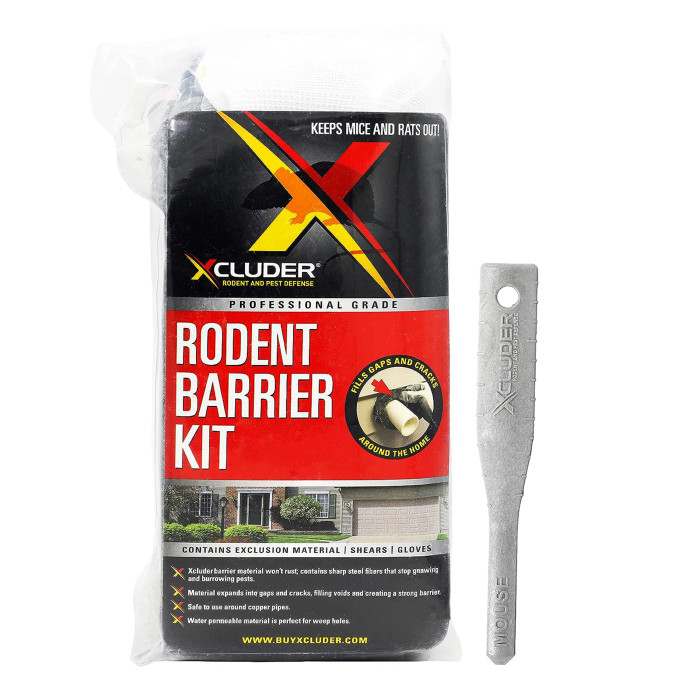
Xcluder Fill Fabric is made from a blend of stainless steel and poly fibers that compresses into gaps, cracks and holes to create a physical barrier against rodents. It can be used around many common structural and utility penetrations where an irregular opening needs to be sealed.
Unlike ordinary steel wool, the stainless steel material won't rust. The flexible construction also makes Fill Fabric useful for openings that aren't perfectly shaped or uniform.
As with any exclusion product used in a food facility, placement and installation should be consistent with facility requirements and the product's installation instructions.
Xcluder Rodent-Proof Door Sweeps for Facility Entrances
Doors are among the most common and frequently changing vulnerabilities in a commercial building.
Personnel entrances, maintenance doors and service doors can develop gaps underneath them as sweeps wear, doors shift or flooring changes. Even a door that was properly sealed when installed should be included in ongoing facility inspections.
Xcluder rodent-proof door sweeps are guaranteed to keep mice and rats out. They’re designed to create a reinforced physical barrier along the bottom of the door, preventing mice and rats from using these gaps to enter the facility.
View Xcluder Rodent-Proof Door Sweeps
Commercial Garage and Overhead Door Seals for Loading and Receiving Areas
Loading docks are particularly challenging because they're essential to daily operations and constantly exposed to the outside environment.
Roll-up doors, overhead doors and dock areas may develop openings along the bottom or sides due to wear, uneven surfaces or damaged seals. These gaps deserve close attention as part of a food manufacturing pest control program.
Xcluder commercial garage and dock door products are designed to reinforce these large, high-traffic openings with materials made to prevent rodent gnawing and help maintain an effective physical barrier.
View Xcluder Commercial Garage and Overhead Door Seals
Xcluder Escutcheon Plates for Pipe Penetrations
Pipes rarely fit perfectly into the openings made for them.
The space left around plumbing, process piping and other penetrations can provide an access route through walls and into sensitive areas of the facility.
Xcluder escutcheon plates are designed to close the space around pipe penetrations, providing a durable physical barrier while giving the finished installation a clean appearance.
View Xcluder Escutcheon Plates
Exclusion Needs to Be an Ongoing Process
Installing rodent barriers shouldn't be treated as a one-time project.
Food facilities change constantly. Equipment is added or moved. New utilities are installed. Doors and dock seals experience wear. Building materials shift. Repairs create new penetrations. A facility that was tightly sealed a year ago may have entirely different vulnerabilities today.
That is why exclusion works best as part of an ongoing inspection, maintenance and pest-management program.
Facility teams and pest management professionals should regularly look for new openings, damaged seals and evidence that an existing barrier needs repair or replacement. High-traffic areas such as receiving docks, service entrances and utility penetrations deserve particular attention.
Findings should also be handled within the facility's established pest-management and food-safety procedures, including whatever inspection records, corrective actions, verification or documentation are required by the regulations and standards applicable to that operation.
The goal isn't simply to install exclusion products. It's to maintain an effective barrier over time.
Build Rodent Exclusion Into Your Food Facility's Pest Management Program
Keeping rodents out of a food processing or food manufacturing facility takes a coordinated approach.
Sanitation helps remove food, water and harborage that can attract pests. Monitoring helps identify activity. Inspection reveals changing conditions. Corrective action addresses problems when they're found. Documentation helps demonstrate that the program is being implemented and maintained.
And physical exclusion stops rodents from exploiting an opening and getting inside the building.
Xcluder products are designed to support that vital part of the program by creating proven physical barriers that protect the variety of gaps and penetrations rodents use to get inside.
Explore Xcluder’s proven commercial rodent exclusion products to strengthen the physical exclusion component of your facility’s pest management program. Xcluder offers Fill Fabric, rodent-proof door sweeps and seals, commercial garage and dock door products, escutcheon plates, and other solutions specifically designed to address common rodent entry points
Food Processing & Food Manufacturing Pest Control FAQs
What Is the Best Way to Prevent Rodents in Food Processing and Food Manufacturing Facilities?
Rodent prevention should be addressed through a comprehensive pest-management program rather than any single control measure. Sanitation, inspection, monitoring, facility maintenance, corrective action and physical exclusion all have a role.
Exclusion is a vital part of the plan because it focuses on preventing rodents from entering the facility in the first place. Sealing gaps around doors, docks, pipe penetrations, utilities and other structural openings with proven products specifically designed for rodent exclusion creates durable physical barriers that stop rodents before they get inside.
How Does Rodent Exclusion Support an Integrated Pest Management Program?
Integrated Pest Management, or IPM, uses multiple complementary strategies to prevent and control pests. Physical exclusion supports IPM by addressing pest access to the building itself.
Closing entry points with proven exclusion solutions complements sanitation, monitoring, maintenance and other pest-control measures.
Are Xcluder Rodent Exclusion Products Suitable for Food Processing and Food Manufacturing Facilities?
Yes! Xcluder products create physical barriers against rodents without relying on poisons or chemicals and can be used in a variety of commercial and food-facility applications. The appropriate product and installation method will depend on the location, type of opening and requirements of the facility.
Facilities should always follow applicable regulations, food-safety procedures and product installation instructions when selecting and installing exclusion materials.
How Often Should Food Facilities Inspect for Rodent Entry Points?
Rodent entry points should be inspected as part of the facility's established pest-management, sanitation and maintenance programs.
Additional attention should be given to areas where conditions change frequently or materials experience significant wear, including loading docks, receiving doors, service entrances, overhead doors and utility penetrations. Any new construction, equipment installation or building repair is also a good reason to reassess the surrounding area for new gaps or openings.
Products Selected
Compare